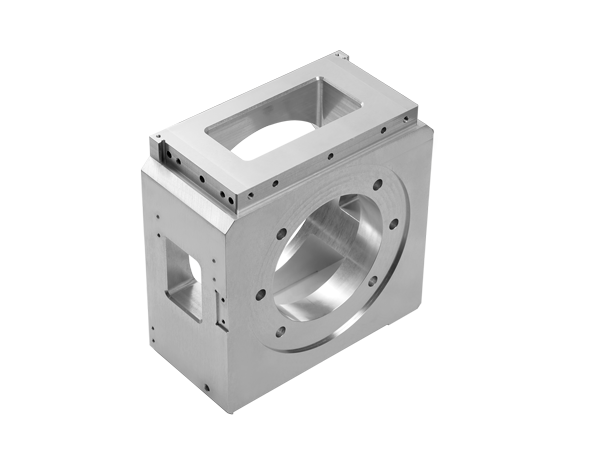
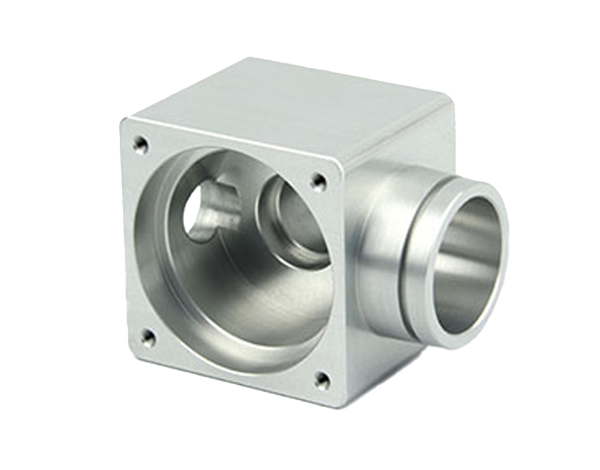
Bearing flange for medical equipment
Read more
In today’s competitive manufacturing environment, businesses are increasingly turning to OEM stainless steel CNC machining services to meet the growing demand for high-precision metal components. From automotive assemblies to industrial machinery, the need for custom, reliable, and durable parts has never been higher. For buyers seeking to partner with a capable CNC machining manufacturer, understanding the intricacies of OEM stainless steel CNC services is essential for ensuring product quality, cost-efficiency, and timely delivery.
Xinbanghui, an experienced CNC machining manufacturer, specializes in providing high-precision CNC machining services and metal parts manufacturing for automotive and industrial applications. With advanced equipment and technical expertise, Xinbanghui helps clients transform complex designs into high-performance stainless steel components.
This article provides a comprehensive guide for buyers considering OEM stainless steel CNC machining services, highlighting critical considerations, challenges, and best practices.
OEM, or Original Equipment Manufacturer, refers to companies that produce components or products that are used in another company's finished products. OEM stainless steel CNC machining services involve the precision machining of stainless steel parts according to the client’s specifications, drawings, or CAD models, which are then supplied for integration into the buyer’s final products.
These services are particularly valuable for industries that require:
High precision and tight tolerances
Durable and corrosion-resistant components
Custom geometries that standard parts cannot fulfill
Reliable batch production for both prototypes and large-scale manufacturing
Using CNC (Computer Numerical Control) technology, manufacturers can efficiently produce stainless steel components with consistent quality, repeatability, and accuracy, even for complex designs.
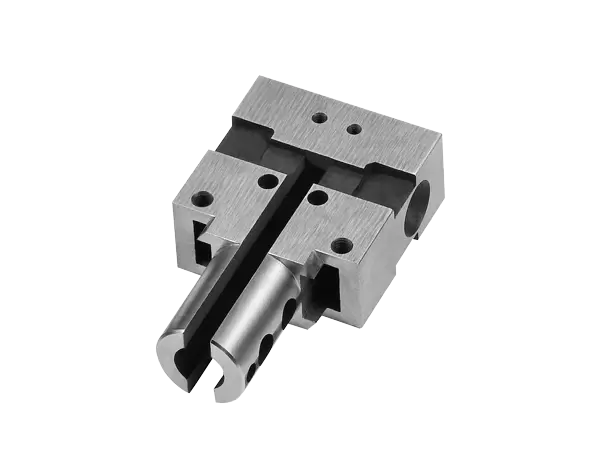
Stainless steel has become one of the most popular materials for OEM machined parts due to its excellent mechanical and chemical properties. Common stainless steel grades used in CNC machining include 304, 316, 410, and 17-4PH. These materials are widely applied in automotive, industrial, and medical sectors for their reliability and longevity.
Key advantages of stainless steel include:
High strength and durability: Can withstand heavy loads and mechanical stress.
Corrosion resistance: Ideal for harsh environments and fluid-exposed applications.
Thermal stability: Maintains performance under varying temperatures.
Biocompatibility (for medical applications): Certain grades are safe for human contact.
Long service life: Reduces maintenance costs and replacement frequency.
Despite these benefits, stainless steel poses machining challenges due to its toughness, work-hardening tendency, and heat generation during cutting, which must be carefully managed by skilled OEM CNC machining providers.
When sourcing OEM stainless steel CNC machining services, buyers must be aware of several critical factors to ensure successful outcomes.
Different stainless steel grades have unique properties and machining characteristics. Buyers need to choose the appropriate material based on:
Mechanical strength requirements
Corrosion resistance needed for the application
Heat and wear resistance
Compatibility with finishing processes such as polishing or passivation
A reliable CNC machining manufacturer like Xinbanghui can provide guidance on material selection to balance performance, machinability, and cost.
OEM parts often require tight tolerances to ensure proper fit and function. CNC machines are capable of achieving micron-level accuracy, but the manufacturer’s experience, tooling, and quality control systems are crucial. Buyers should clarify:
Required tolerances for each critical feature
Surface finish expectations
Allowable deviations and quality standards
Buyers need to determine the anticipated production volume, as this influences tooling, lead time, and cost. OEM CNC machining services can support:
Prototyping: Small batch runs for testing and design validation
Low-volume production: Limited runs with flexible scheduling
Mass production: Large-scale batches with consistent quality
A manufacturer with advanced CNC equipment and a flexible production system can scale efficiently without compromising accuracy.
Many OEM applications involve complex geometries, such as deep cavities, thin walls, intricate profiles, or multi-feature components. Multi-axis CNC machines and expert programming are required to manufacture such parts reliably. Buyers should discuss:
Feasibility of design features
Recommended modifications to optimize manufacturability
Potential cost and time implications
High-quality OEM components are dependent on rigorous quality control throughout the CNC machining process. Key practices include:
Incoming material inspection: Ensures raw stainless steel meets grade specifications
In-process monitoring: Verifies dimensional accuracy during machining
Final inspection: Uses coordinate measuring machines (CMM) and precision gauges
Documentation and traceability: Provides quality records for compliance and audits
Xinbanghui implements comprehensive quality assurance protocols to ensure every part meets the strict requirements of automotive and industrial applications.
The automotive sector relies heavily on OEM stainless steel components for engine, transmission, exhaust, and structural applications. Examples include:
Precision shafts and bushings
Engine brackets and housings
Exhaust system components
Fasteners and connectors
Industrial equipment often demands durable, corrosion-resistant stainless steel parts for machinery, automation, and tooling. Examples include:
Custom valves and fittings
Gear housings and flanges
Robotic end-effectors and fixtures
Power transmission components
Partnering with an experienced CNC machining manufacturer offers multiple advantages for buyers:
Technical Expertise: Knowledge of complex stainless steel machining processes reduces the risk of defects.
Design Support: Manufacturers can provide design-for-manufacturability (DFM) advice to optimize part performance and reduce cost.
Advanced Equipment: Multi-axis CNC machines enable high-precision machining for intricate geometries.
Consistent Quality: Quality assurance processes ensure every part meets specifications.
Timely Delivery: Reliable manufacturers manage production schedules and lead times efficiently.
Xinbanghui exemplifies these advantages, providing tailored CNC machining solutions for automotive and industrial applications, from prototype to mass production.
In OEM applications, surface finish can affect both aesthetics and functionality. Common finishing processes for stainless steel CNC machined parts include:
Polishing (mirror or satin finishes)
Bead blasting for uniform texture
Passivation for enhanced corrosion resistance
Electropolishing for hygienic and medical applications
Selecting the right finishing option improves durability, reduces friction, and ensures the part performs as intended in its end application.
When evaluating OEM stainless steel CNC machining services, buyers should consider both cost and lead time factors:
Material grade and availability
Complexity of part geometry
Required tolerances and surface finish
Production volume
Post-processing requirements
A knowledgeable manufacturer can help optimize these factors to achieve the best balance between quality, cost, and delivery schedule.
Selecting the right partner is critical for OEM stainless steel CNC machining success. Buyers should look for:
Proven experience with stainless steel and complex designs
Advanced CNC equipment and multi-axis capabilities
Strong quality control and inspection protocols
Flexibility in production volumes
Industry-specific expertise (automotive, industrial, medical)
A trusted partner like Xinbanghui not only provides machining services but also acts as a technical collaborator, helping buyers optimize designs and achieve high-performance components.
OEM stainless steel CNC machining services are essential for producing high-precision, durable, and complex parts used in automotive and industrial applications. Buyers must consider material selection, tolerances, production volume, complex geometries, and quality assurance when sourcing CNC machining services.
By partnering with an experienced CNC machining manufacturer such as Xinbanghui, buyers can ensure reliable performance, consistent quality, and scalable production. Understanding these factors empowers businesses to make informed decisions and leverage OEM CNC machining as a strategic advantage in today’s competitive manufacturing landscape.