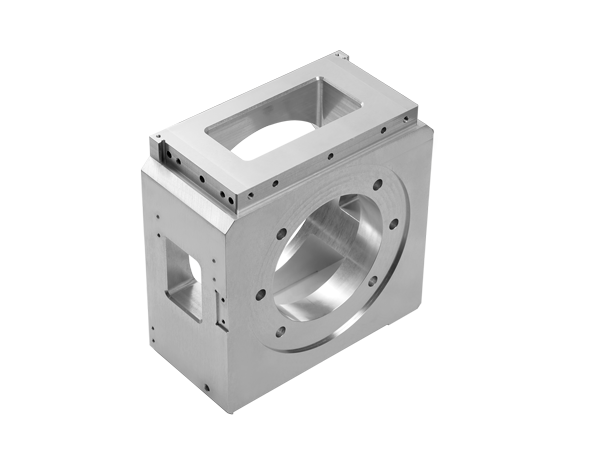
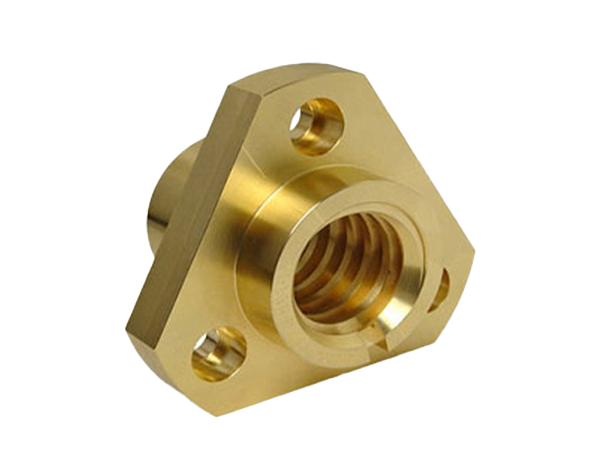
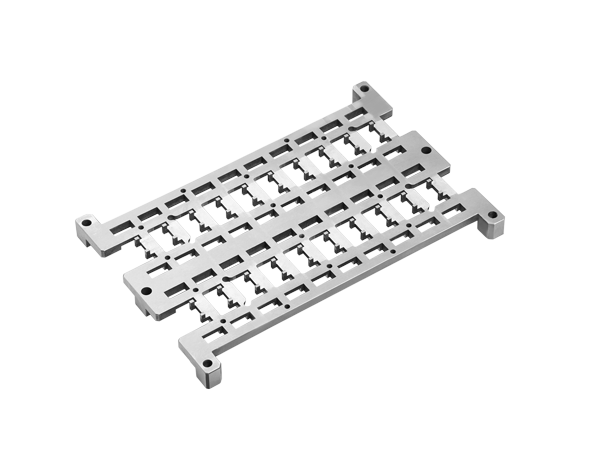
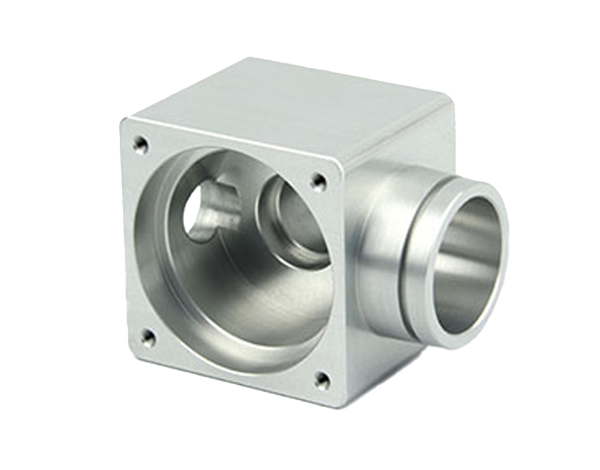
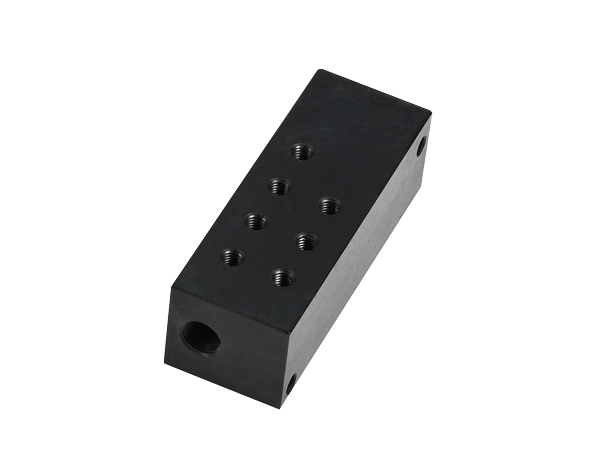
Bearing flange for medical equipment
Read more
In the modern industrial landscape, precision, reliability, and efficiency are not mere advantages—they are requirements. Industries ranging from aerospace and automotive to medical devices and energy production rely heavily on components that meet exacting specifications. Stainless steel, with its exceptional mechanical properties and resistance to corrosion, has emerged as a preferred material for such applications. Coupled with advanced CNC (Computer Numerical Control) machining techniques, stainless steel components can achieve unparalleled precision and consistency. This article explores the benefits, applications, processes, and key considerations of high-precision stainless steel CNC machining services in industrial settings.
Stainless steel is an alloy of iron, chromium, and often nickel and molybdenum, offering a combination of strength, corrosion resistance, and formability. These characteristics make it ideal for industrial components exposed to harsh environments, high temperatures, or corrosive substances. Key properties that make stainless steel suitable for CNC machining include:
Corrosion Resistance: The chromium content in stainless steel forms a passive oxide layer that protects against rust and corrosion. This makes it suitable for marine, chemical, and food-processing applications.
High Strength-to-Weight Ratio: Stainless steel offers robust structural integrity without excessive bulk, crucial for applications requiring durability under stress.
Temperature Resistance: Certain stainless steel grades can withstand extreme temperatures, making them suitable for aerospace engines, industrial furnaces, and energy systems.
Biocompatibility: Medical and pharmaceutical industries require materials that are safe for human contact. Stainless steel meets these standards, making it ideal for surgical instruments, implants, and processing equipment.
While these properties make stainless steel highly desirable, its hardness and toughness pose challenges for conventional machining. That’s where CNC machining excels.
CNC machining is a computer-controlled manufacturing process that uses pre-programmed software to control cutting tools. This technology enables manufacturers to produce complex, high-precision components with minimal human error. The advantages of CNC machining for stainless steel components include:
High-precision CNC machines can achieve tolerances as tight as ±0.001 mm. This level of accuracy is essential for industrial applications where even minor deviations can compromise performance. For example:
Aerospace components such as turbine blades require exacting dimensions to maintain aerodynamic efficiency.
Medical devices such as surgical instruments must meet strict dimensional standards to ensure safety and efficacy.
CNC machining ensures that every part produced, whether in small batches or mass production, meets the same stringent specifications.
Traditional manual machining can struggle with intricate designs. CNC machining allows for the creation of complex geometries, including:
Internal channels and cavities
Helical structures and threads
3D contours and non-linear surfaces
This capability enables engineers to design parts that are both functionally superior and optimized for performance.
CNC machining minimizes manual intervention, allowing for faster production cycles. Once a part design is programmed, the machine can operate continuously with minimal supervision, significantly reducing lead times. This efficiency is particularly beneficial for industries with tight production schedules, such as automotive or electronics manufacturing.
While initial CNC setup may involve higher costs, the process becomes increasingly cost-effective for medium to large-scale production. The ability to produce precise parts consistently reduces waste and the need for secondary finishing, lowering overall manufacturing costs.
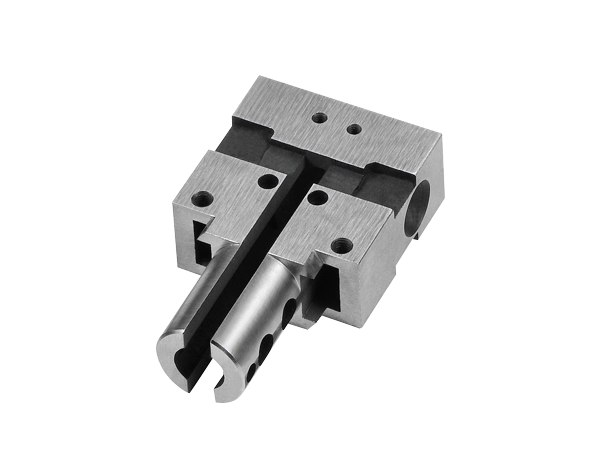
Stainless steel CNC machining encompasses a range of processes tailored to specific industrial requirements:
Milling uses rotary cutters to remove material from a workpiece, creating flat surfaces, slots, and complex 3D shapes. High-precision milling machines can handle stainless steel’s hardness, producing components like:
Engine brackets
Machine housings
Precision molds for industrial production
Multi-axis CNC milling machines, such as 5-axis systems, enable intricate geometries with tight tolerances, expanding the scope of design possibilities.
Turning involves rotating the workpiece while a cutting tool removes material to create cylindrical shapes. CNC turning is ideal for components such as:
Shafts and rods
Bushings and bearings
Hydraulic cylinders
Advanced turning centers can perform threading, grooving, and contouring operations in a single setup, improving efficiency and accuracy.
CNC drilling and boring machines produce precise holes, threads, and internal bores. These processes are essential for applications requiring:
Fluid channels in valves and pumps
Mounting holes in structural components
Threaded inserts for assembly
High-precision drills can maintain concentricity and depth accuracy, ensuring components fit perfectly in assemblies.
Stainless steel often requires post-machining surface finishing to enhance appearance, reduce friction, or improve corrosion resistance. Common finishing methods include:
Polishing and buffing for aesthetic and functional smoothness
Bead blasting for uniform matte finishes
Passivation to reinforce corrosion resistance
Finishing processes complement CNC machining by ensuring components meet both functional and cosmetic requirements.
High-precision stainless steel components are critical across multiple industrial sectors:
In aerospace, performance and safety are paramount. CNC-machined stainless steel components are used in:
Engine parts that endure high stress and temperature fluctuations
Landing gear components requiring strength and corrosion resistance
Structural brackets and assemblies designed for precise fit
The repeatability of CNC machining ensures that each part performs reliably in critical applications.
Medical devices and surgical instruments demand exact tolerances and biocompatibility. CNC machining provides:
Surgical tools with ergonomic designs and precise cutting edges
Implantable devices with complex geometries tailored to human anatomy
Laboratory equipment resistant to corrosion and sterilization chemicals
High-quality machining minimizes the risk of defects, enhancing patient safety.
In automotive manufacturing, stainless steel CNC components contribute to performance, durability, and safety:
Exhaust systems and manifolds resistant to high temperatures and corrosion
Precision engine components such as shafts and gear housings
Custom brackets and mounts for structural integrity
CNC machining enables rapid prototyping, allowing manufacturers to test new designs efficiently.
CNC-machined stainless steel components are widely used in power generation, chemical processing, and industrial machinery:
Pumps and valves handling corrosive fluids
Hydraulic and pneumatic cylinders requiring precise tolerances
Custom machinery parts exposed to high wear and stress
The combination of material strength and machining precision ensures long-lasting and reliable performance in demanding environments.
Choosing a reliable CNC machining service is critical for industrial applications. Key considerations include:
Material Expertise: Ensure the provider has experience machining various stainless steel grades, including 304, 316, and specialty alloys.
Precision Capabilities: Confirm that the facility can meet required tolerances and maintain consistency across large production runs.
Equipment Quality: Advanced multi-axis CNC machines provide flexibility for complex geometries and high-volume production.
Quality Assurance: Look for ISO-certified facilities that implement strict quality control measures, including inspection reports, coordinate measuring machines (CMM), and traceability documentation.
Customization and Support: A responsive service provider can collaborate on design optimization, prototyping, and material selection to enhance performance and cost-efficiency.
By selecting a capable partner, industries can leverage high-precision CNC machining to achieve superior product quality and reliability.
The CNC machining industry continues to evolve with technological advancements:
Automation and Robotics: Integration of robotic arms and automated material handling reduces labor costs and increases production efficiency.
Advanced Tooling Materials: Use of carbide, ceramic, and coated tools enhances cutting performance and tool life when machining stainless steel.
Hybrid Manufacturing: Combining CNC machining with additive manufacturing (3D printing) allows for complex, lightweight structures previously impossible to produce.
Smart Manufacturing: IoT-enabled CNC machines provide real-time monitoring, predictive maintenance, and process optimization, ensuring consistent quality and reducing downtime.
These trends promise even higher precision, faster turnaround times, and cost-effective solutions for industrial components.
High-precision stainless steel CNC machining has become indispensable in modern industry. Its ability to produce complex, durable, and accurate components makes it a cornerstone of aerospace, medical, automotive, and industrial manufacturing. By combining the inherent advantages of stainless steel with the precision and efficiency of CNC technology, manufacturers can deliver components that meet the most stringent standards.
Selecting the right CNC machining partner, understanding material and design requirements, and keeping abreast of technological trends are critical for success. As industries continue to demand higher precision and reliability, high-precision stainless steel CNC machining services will remain a vital tool for innovation, performance, and competitive advantage.